

Template Method Pattern

The Template Method Pattern is a behavioral design pattern that defines the skeleton of an algorithm in a base class and lets subclasses override specific steps—without changing the overall structure.
Think of a recipe. The steps are always the same: prepare ingredients, cook, plate, serve. But the actual ingredients and cooking technique vary by dish. The recipe is the template; each dish is a subclass.
The Problem
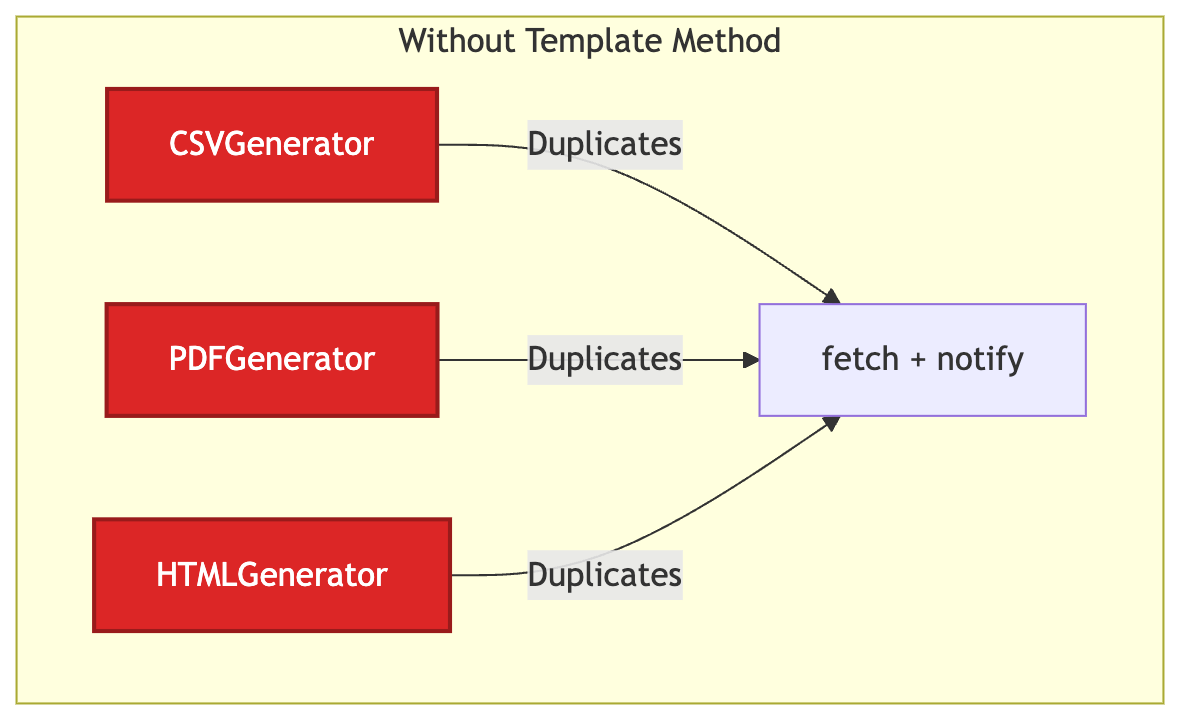
Imagine you're building a data report generator. Different reports (CSV, PDF, HTML) follow the same overall process but differ in specific steps:
// Without Template Method - massive duplication
class CSVReportGenerator {
    public void generateReport() {
        // Step 1: fetch data
        System.out.println("Fetching data from DB...");

        // Step 2: parse data (CSV-specific)
        System.out.println("Parsing data as CSV...");

        // Step 3: format (CSV-specific)
        System.out.println("Formatting as comma-separated values...");

        // Step 4: export (CSV-specific)
        System.out.println("Exporting as .csv file...");

        // Step 5: notify
        System.out.println("Sending notification...");
    }
}

class PDFReportGenerator {
    public void generateReport() {
        // Step 1: fetch data (DUPLICATED!)
        System.out.println("Fetching data from DB...");

        // Step 2-4: PDF-specific (duplicates structure)
        System.out.println("Parsing data as PDF...");
        System.out.println("Formatting with layout engine...");
        System.out.println("Exporting as .pdf file...");

        // Step 5: notify (DUPLICATED!)
        System.out.println("Sending notification...");
    }
}
Problems:
Code duplication: The overall algorithm is copy-pasted across classes
Hard to maintain: Fixing a shared step requires updating every class
Inconsistency risk: One class might forget a step entirely
No enforced structure: Nothing stops a subclass from skipping critical steps
The Solution: Template Method Pattern
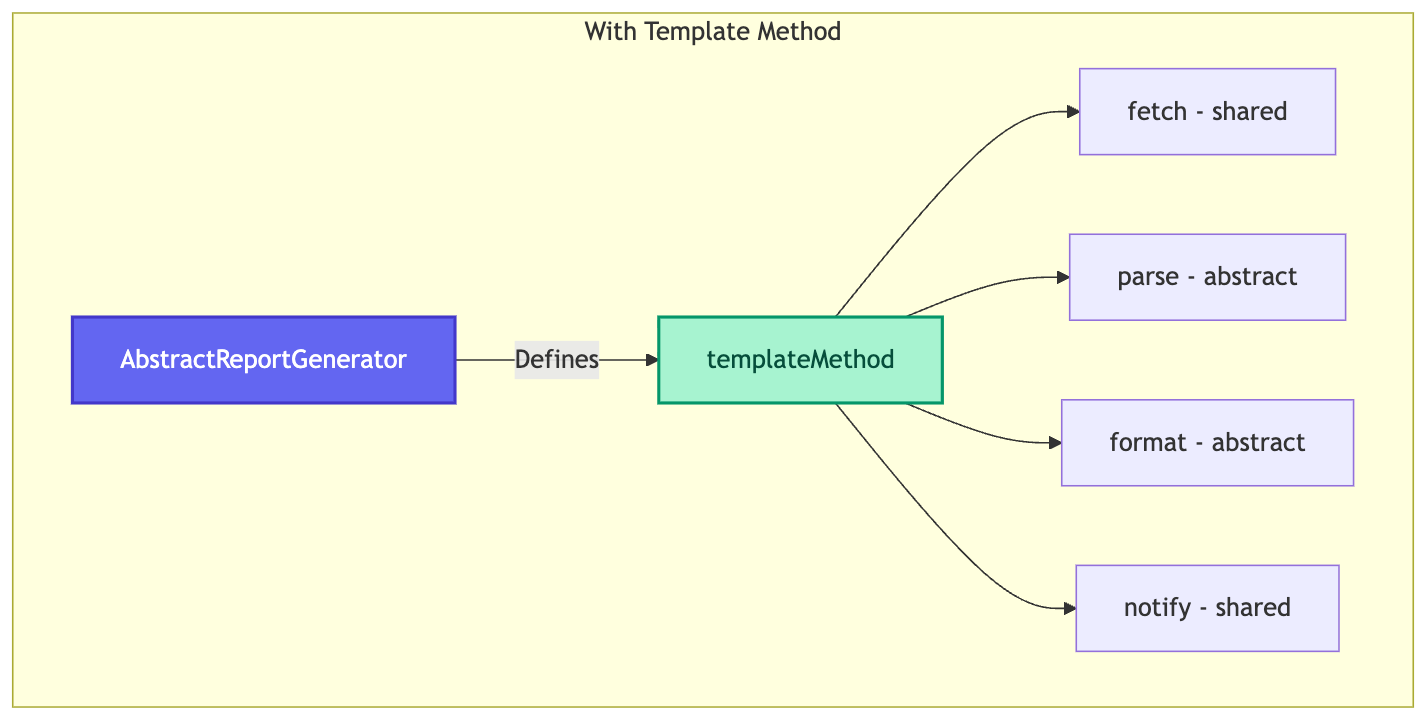
The Template Method Pattern puts the algorithm skeleton in a base class and delegates varying steps to subclasses.
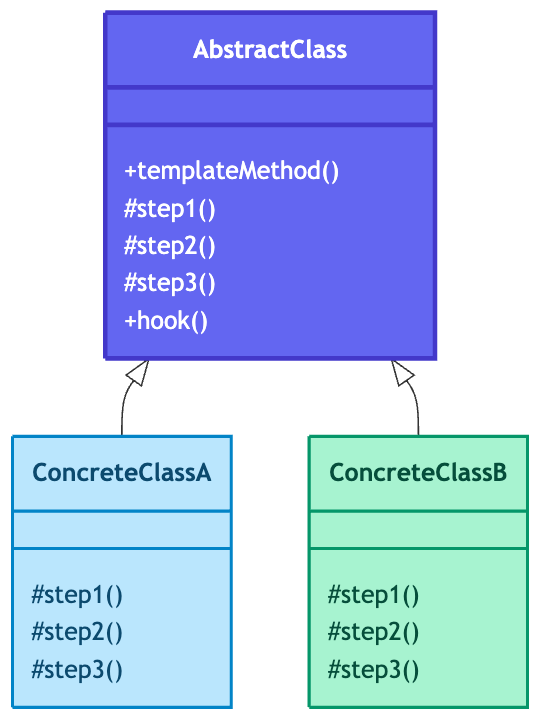
The pattern separates:
What stays the same (template method in base class)
What varies (overridden steps in subclasses)
What's optional (hooks — overridable but with default behavior)
How It Solves Each Problem
| Problem | How Template Method Solves It |
|---|---|
| Code duplication | Shared steps live once in the base class template method. |
| Hard to maintain | Fix a shared step in one place—all subclasses benefit. |
| Inconsistency risk | The algorithm structure is enforced by the base class. |
| No enforced structure | templateMethod() is final—subclasses can't reorder steps. |
Key Components
AbstractClass: Defines the
templateMethod()and declares abstract/hook stepsConcreteClass: Implements the varying steps for a specific algorithm variant
Template Method: The
finalmethod that orchestrates the algorithmHook Methods: Optional overridable methods with default (often empty) implementations
How It Solves the Problem
Real-World Implementation
Example 1: Report Generator
// Abstract Class
abstract class ReportGenerator {

    // Template Method - final so subclasses cannot change the order
    public final void generateReport() {
        fetchData();
        parseData();
        formatReport();
        if (shouldExport()) {
            exportReport();
        }
        sendNotification();
    }

    // Shared steps - implemented in base class
    private void fetchData() {
        System.out.println("Fetching data from database...");
    }

    private void sendNotification() {
        System.out.println("Notification sent: report is ready.\n");
    }

    // Abstract steps - subclasses must implement
    protected abstract void parseData();
    protected abstract void formatReport();
    protected abstract void exportReport();

    // Hook - subclasses may override; default is true
    protected boolean shouldExport() {
        return true;
    }
}

// Concrete Class - CSV
class CSVReportGenerator extends ReportGenerator {
    @Override
    protected void parseData() {
        System.out.println("Parsing data as CSV rows...");
    }

    @Override
    protected void formatReport() {
        System.out.println("Formatting with comma separators...");
    }

    @Override
    protected void exportReport() {
        System.out.println("Exporting as report.csv");
    }
}

// Concrete Class - PDF
class PDFReportGenerator extends ReportGenerator {
    @Override
    protected void parseData() {
        System.out.println("Parsing data as PDF content blocks...");
    }

    @Override
    protected void formatReport() {
        System.out.println("Formatting with PDF layout engine...");
    }

    @Override
    protected void exportReport() {
        System.out.println("Exporting as report.pdf");
    }
}

// Concrete Class - HTML (with hook override)
class HTMLReportGenerator extends ReportGenerator {
    @Override
    protected void parseData() {
        System.out.println("Parsing data as HTML table rows...");
    }

    @Override
    protected void formatReport() {
        System.out.println("Formatting with HTML/CSS templates...");
    }

    @Override
    protected void exportReport() {
        System.out.println("Publishing to web server...");
    }

    @Override
    protected boolean shouldExport() {
        System.out.println("Checking server availability...");
        return true;
    }
}

// Client
public class ReportDemo {
    public static void main(String[] args) {
        System.out.println("=== CSV Report ===");
        new CSVReportGenerator().generateReport();

        System.out.println("=== PDF Report ===");
        new PDFReportGenerator().generateReport();

        System.out.println("=== HTML Report ===");
        new HTMLReportGenerator().generateReport();
    }
}
Example 2: Beverage Preparation (Classic GoF Example)
// Abstract Class
abstract class Beverage {

    // Template Method
    public final void prepare() {
        boilWater();
        brew();
        pourInCup();
        if (customerWantsCondiments()) {
            addCondiments();
        }
    }

    // Shared steps
    private void boilWater() {
        System.out.println("Boiling water...");
    }

    private void pourInCup() {
        System.out.println("Pouring into cup...");
    }

    // Abstract steps
    protected abstract void brew();
    protected abstract void addCondiments();

    // Hook - customer can skip condiments
    protected boolean customerWantsCondiments() {
        return true;
    }
}

// Concrete Class - Tea
class Tea extends Beverage {
    @Override
    protected void brew() {
        System.out.println("Steeping the tea bag...");
    }

    @Override
    protected void addCondiments() {
        System.out.println("Adding lemon...");
    }
}

// Concrete Class - Coffee
class Coffee extends Beverage {
    @Override
    protected void brew() {
        System.out.println("Dripping coffee through filter...");
    }

    @Override
    protected void addCondiments() {
        System.out.println("Adding milk and sugar...");
    }

    @Override
    protected boolean customerWantsCondiments() {
        System.out.println("Customer wants black coffee - skipping condiments.");
        return false;
    }
}

// Client
public class BeverageDemo {
    public static void main(String[] args) {
        System.out.println("=== Making Tea ===");
        new Tea().prepare();

        System.out.println("\n=== Making Coffee ===");
        new Coffee().prepare();
    }
}
Example 3: Data Migration Pipeline
// Abstract Class
abstract class DataMigrationPipeline {

    // Template Method
    public final void migrate() {
        System.out.println("--- Starting Migration ---");
        connect();
        extractData();
        transformData();
        validateData();
        loadData();
        disconnect();
        System.out.println("--- Migration Complete ---\n");
    }

    // Fixed shared steps
    private void connect() {
        System.out.println("Connecting to source and target systems...");
    }

    private void disconnect() {
        System.out.println("Disconnecting from all systems.");
    }

    private void validateData() {
        System.out.println("Validating transformed data...");
    }

    // Abstract steps
    protected abstract void extractData();
    protected abstract void transformData();
    protected abstract void loadData();
}

// MySQL to PostgreSQL
class MySQLToPostgresPipeline extends DataMigrationPipeline {
    @Override
    protected void extractData() {
        System.out.println("Extracting data from MySQL tables...");
    }

    @Override
    protected void transformData() {
        System.out.println("Transforming MySQL data types to PostgreSQL...");
    }

    @Override
    protected void loadData() {
        System.out.println("Loading data into PostgreSQL schema...");
    }
}

// CSV to MongoDB
class CSVToMongoPipeline extends DataMigrationPipeline {
    @Override
    protected void extractData() {
        System.out.println("Reading rows from CSV files...");
    }

    @Override
    protected void transformData() {
        System.out.println("Transforming CSV rows into JSON documents...");
    }

    @Override
    protected void loadData() {
        System.out.println("Inserting documents into MongoDB collections...");
    }
}

// Client
public class MigrationDemo {
    public static void main(String[] args) {
        System.out.println("=== MySQL to PostgreSQL ===");
        new MySQLToPostgresPipeline().migrate();

        System.out.println("=== CSV to MongoDB ===");
        new CSVToMongoPipeline().migrate();
    }
}
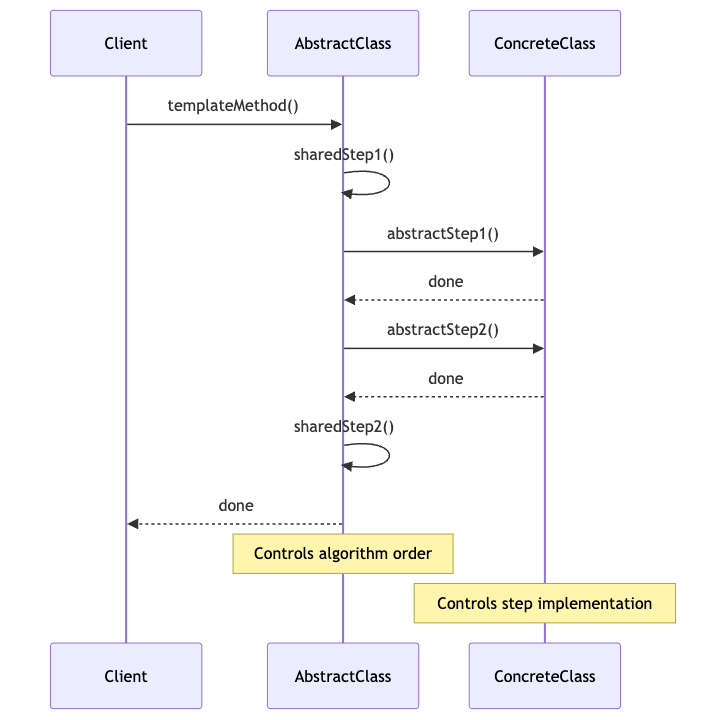
Workflow Diagram
Real-World Use Cases
Report Generators: PDF, CSV, HTML reports with shared fetch/notify steps
Data Pipelines: ETL (Extract, Transform, Load) workflows
Web Frameworks: Spring's
JdbcTemplate,RestTemplateTest Frameworks: JUnit's
setUp()/tearDown()lifecycleBuild Tools: Maven/Gradle build lifecycle phases
Game Loops: Initialize → update → render → cleanup
Authentication Flows: Shared validation with custom login strategies
When to Use the Template Method Pattern
✅ Use When
Shared Algorithm Structure: Multiple classes follow the same steps
Controlled Extension: You want subclasses to customize only specific steps
Avoid Duplication: Common steps are duplicated across classes
Framework Hooks: You provide a framework with extension points
❌ Avoid When
Too Many Subclasses: If every step varies, consider Strategy Pattern instead
Deep Inheritance: Inheritance chains become hard to follow
Simple Algorithms: Overhead isn't justified for trivial cases
Benefits
Eliminate Duplication: Shared steps live in one place
Enforced Structure: Algorithm order guaranteed by
finaltemplate methodOpen/Closed Principle: Add new variants without modifying the base class
Hollywood Principle: "Don't call us, we'll call you"—base class controls flow
Drawbacks
Inheritance Required: Must subclass, which increases coupling
Liskov Risk: Subclasses must honor the base class contract
Debugging Complexity: Flow jumps between base and subclasses
Template Method vs Strategy Pattern
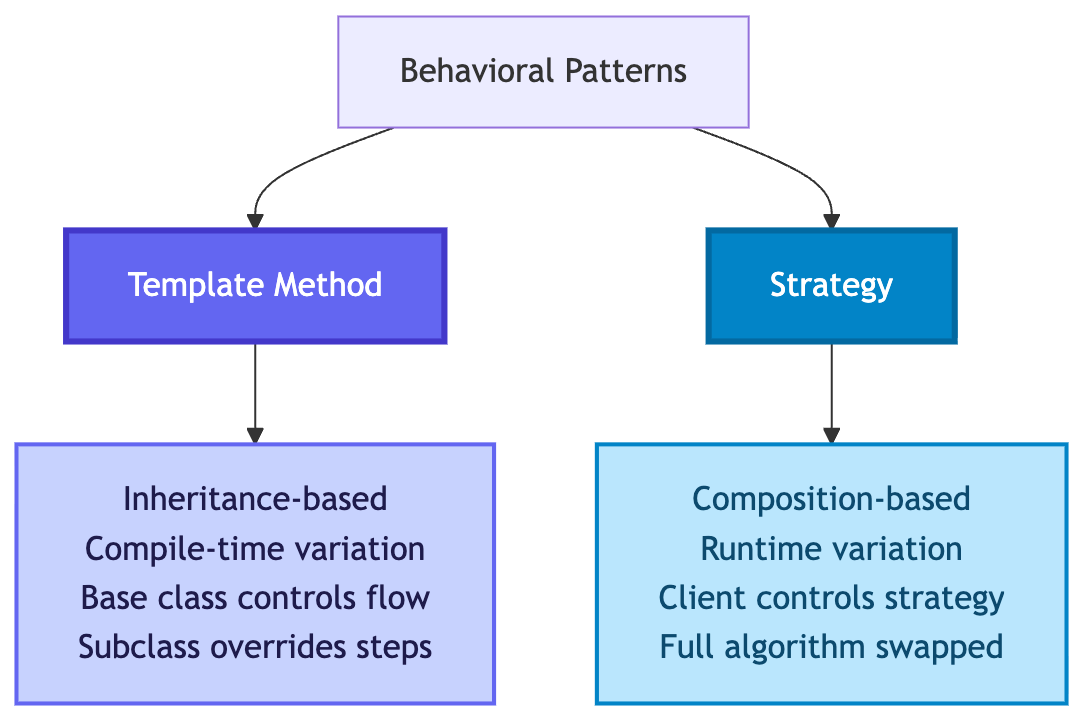
| Aspect | Template Method | Strategy |
|---|---|---|
| Mechanism | Inheritance | Composition |
| Variation | Compile-time | Runtime |
| Control | Base class | Client |
| Granularity | Step-level | Algorithm-level |
| Best For | Fixed structure, varying steps | Swappable full algorithms |
Best Practices
Make Template Method
final: Prevent subclasses from reordering stepsMinimize Abstract Methods: Only make steps abstract if they truly vary
Use Hooks Wisely: Provide hooks for optional customization
Name Methods Clearly: Step names should express intent, not implementation
Prefer Narrow Overrides: Subclasses should override as little as possible
Document the Template: Make the algorithm structure obvious with comments
Conclusion
The Template Method Pattern is one of the most elegant ways to enforce a consistent algorithm while allowing flexible customization. It's the backbone of countless frameworks and libraries—and once you see it, you'll spot it everywhere.
Remember: Define the skeleton, let subclasses fill in the flesh! 🦴
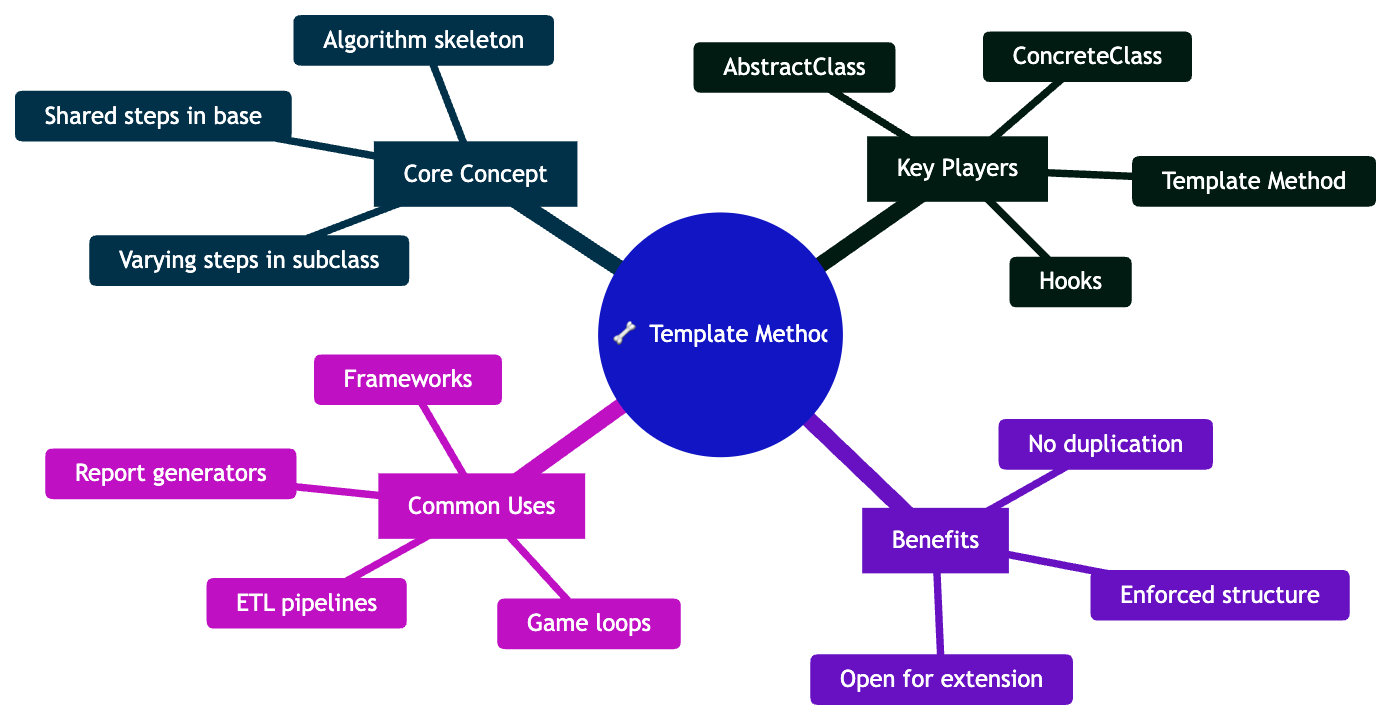
🎯 Key Takeaway
The Template Method Pattern is about defining the recipe once and letting subclasses choose the ingredients. When your algorithm structure is fixed but the steps vary—template it!
A junior dev asked, "Why is templateMethod() marked final?" The senior replied, "Because the last time I let someone override it, they skipped the validation step, deployed on Friday, and we spent the weekend undoing it." The junior slowly closed the PR. 😄
Happy Templating! 🦴✨


